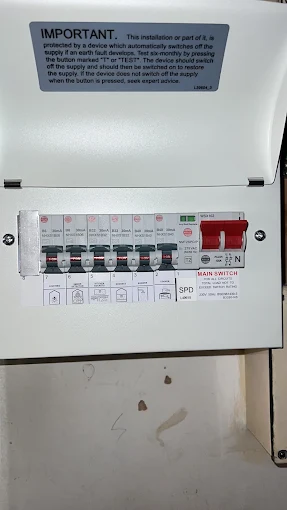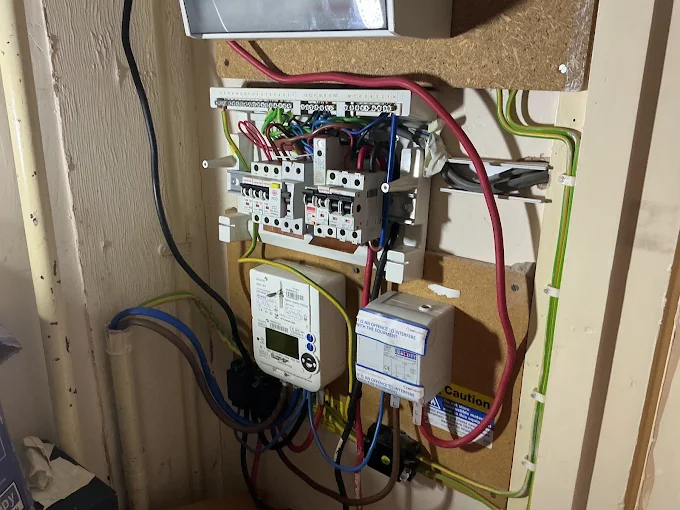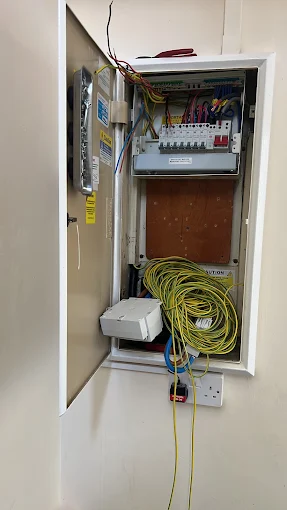
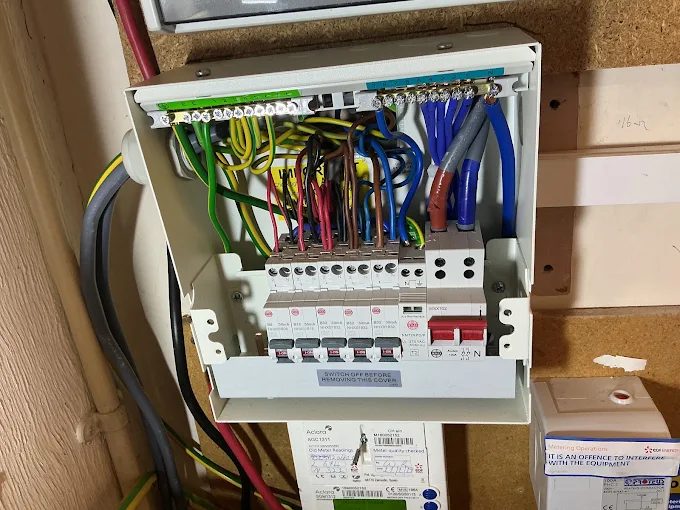
Consumer unit rewired with new RCBOs and neatly dressed cabling
From isolating the supply to the final certificate, here is what a fuse board replacement looks like on a typical London home.
We test before we touch anything
Before a single screw comes out, we test the existing installation. Insulation resistance, earth continuity and earth loop impedance tell us whether the circuits feeding the new board are actually fit to be reconnected. Fitting a new board onto failing cabling just hides the problem behind a shiny cover.
Old board out, new board in
The supply is isolated, the old unit removed and the new metal enclosure fitted. Each circuit gets its own RCBO, so a fault on the kitchen ring no longer takes out the lights, the freezer and the alarm. Surge protection is fitted where appropriate, and every conductor is dressed and terminated to torque.
Bonding and earthing checked
Main protective bonding to gas and water is one of the most commonly missing items we find. It is checked and upgraded as part of the work, along with the main earthing conductor size.
Testing, labelling and paperwork
Every circuit is tested and recorded, the board is fully labelled with a circuit schedule, and you receive an Electrical Installation Certificate. Building control notification is handled for you.